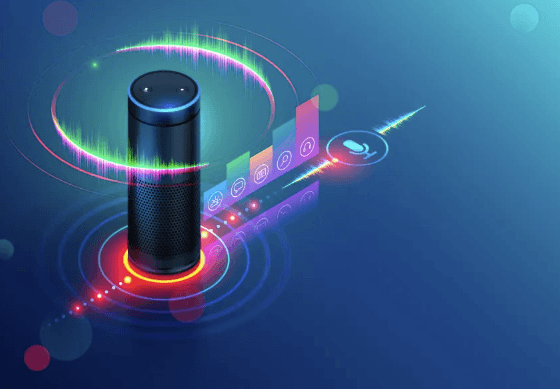
The future of voice-controlled living envisions a dense, interoperable ecosystem. Devices, homes, and personal assistants will share context through standardized protocols and on-device processing. Interfaces become ambient, predictive, and minimally invasive, balancing automation with user autonomy. Governance emphasizes data minimization and auditable consent, preserving privacy without compromising utility. As systems evolve from tools to partners, the challenge is sustaining coherent, secure interactions that respect freedom while remaining scalable; the next question lies in how these transitions will reshape daily life and control.
Landscape of Voice-Controlled Living
The landscape of voice-controlled living is evolving from isolated smart speakers to an integrated, context-aware ecosystem that spans housing, appliances, and personal devices.
This trajectory emphasizes ambient interfaces, machine empathy, and seamless data ownership within smart homes.
Architectural efficiency and standardized protocols enable scalable control, predictive analytics, and user autonomy, while ensuring security and interoperability across heterogeneous environments and future device ecosystems.
How Voice Tech Adapts to Daily Routines
As voice technology moves from isolated devices to an integrated, context-aware ecosystem, daily routines increasingly shape and are shaped by ambient interfaces that anticipate needs, adapt to timing, and align with personal workflows.
Systems evolve with privacy norms, data minimization, and security models, emphasizing ambient listening, user consent, cross device sync, on device processing, wake word reliability, and voice biometric fidelity.
Balancing Privacy, Security, and Convenience
Forward-looking architectures emphasize transparent governance, user control, and auditable consent, enabling freedom without compromising resilience or trust in ambient intelligence systems.
From Tools to Partners: Designing Conversational Homes
Could conversational systems transition from mere tools to trusted partners without compromising user agency or privacy?
The exploration focuses on transitioning from passive assistance to proactive collaboration within homes.
Emphasis rests on voice UX coherence and consistent behavioral transparency, while hardware ecosystems enable scalable, interoperable design.
Future homes balance autonomy with control, enabling secure personalization, auditable interactions, and adaptive interfaces that respect freedom and minimize intrusion.
Frequently Asked Questions
How Will Voice Assistants Evolve Mainstream Accessibility for Disabilities?
Voice assistants will expand mainstream accessibility by embedding accessibility design principles and adaptive modalities, enabling seamless disability empowerment through multimodal input, granular personalization, and robust interoperability, driving inclusive workflows, autonomy, and freedom for diverse users.
Will Voice Tech Replace Traditional In-Person Interactions at Home?
Devices will not fully replace human contact; however, home social interaction may shift as voice tech enhances optional, ambient engagement. The analysis forecasts a gradual home social shift, balancing automation with valued, authentic in-person connections and autonomy.
What Are the Long-Term Health Effects of Constant Listening Devices?
Around 42% report sleep disruption linked to constant listening devices, indicating potential long term health risks. The analysis projects cumulative effects on neurocognitive and stress systems, urging proactive mitigation while preserving autonomy, privacy, and freedom in future households.
Can Voice Systems Understand Multilingual Households Seamlessly?
Multilingual households present challenges, yet advanced voice systems can navigate multilingual barriers through contextual models and adaptive acoustics. With continuous learning, cultural nuances are incorporated, enabling seamless interaction and preserving user autonomy across languages while fostering inclusive, forward-looking usage.
See also: The Future of Voice AI
How Will Voice AI Handle Ethical Dilemmas in Daily Decisions?
Voice AI will systematize ethics in decision making, transparently documenting rationale, while continuously auditing bias and fairness. It analyzes trade-offs, learns from deployment feedback, and aligns with user autonomy, ensuring responsible autonomy without overriding individual freedom.
Conclusion
The landscape of voice-controlled living coalesces into an integrated, anticipatory system, where devices hum with cooperative intelligence rather than mere function. As routines become data-informed rituals, predictive analytics align actions with intent while on-device processing curtails exposure to centralized schisms. Privacy, security, and convenience are not trade-offs but layered protocols, continually audited. From tools to partners, conversational environments evolve into proactive assistants that preserve autonomy, yet remain transparent, configurable, and relentlessly technical in their pursuit of seamless human-machine harmony.
